
Yamaha’s planned £215 million purchase of Disguise would let it offer XR studios and immersive venues the technology behind their visuals as well as their sound. The companies plan to sell their products together and develop more integrated systems. Producers could buy more of an installation through the same group, although the promised product roadmap will need to show how the equipment actually connects.
Yamaha Corporation is taking a £215 million interest in the pictures. Its planned purchase of Disguise would bring the software and media servers behind virtual sets and immersive visual productions into a group already well acquainted with the sound desk.
Yamaha’s acquisition filing sets out plans to sell the two companies’ products together and develop more closely integrated audio and visual systems. A producer putting together an XR studio could eventually source more of the setup through the same group, while Disguise would gain a larger route to customers through Yamaha’s global sales network.
Announced on November 13, the agreement covers ordinary shares and shareholder loan notes in Butterfly Topco, Disguise’s parent. Completion is scheduled for December 2026, when the final consideration will be determined.
Adding Pictures to the Mix
Yamaha already has a long history in immersive audio, including technology that changes how a room sounds and positions sound in three-dimensional space. It brought these systems together under the Sound xR name earlier this year, so the company is well past its first soundcheck in immersive entertainment.
Disguise’s xR production system coordinates digital scenery on LED screens with the cameras filming a physical stage. As a camera moves, the virtual scene needs to keep the right perspective, otherwise the illusion begins to look rather less convincing. Producers can also add augmented reality graphics to the broadcast.
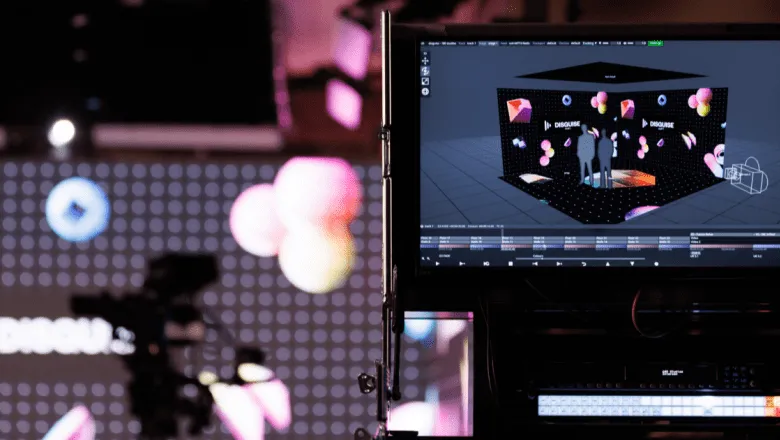
Disguise also documents an xR for VR production process for creating VR180 and VR360 video with a conventional broadcast camera on an LED stage. A production can generate both a regular broadcast feed and a version for viewing in a headset, allowing the same performance to reach audiences using different devices.
A Factory That Fits in the Meeting Room
PTC provides a particularly good example of what a company might actually do with the kit. Its Boston corporate experience center uses a Disguise-powered XR wall to demonstrate products to customers in the room and those joining remotely, with virtual environments created by Meptik.
Presenters can show how industrial software fits into a customer’s own factory environment and change the demonstration as the discussion develops. A robotic camera system supports the remote experience, while the virtual scenery saves PTC the inconvenience of trying to fit an actual factory into a meeting room.
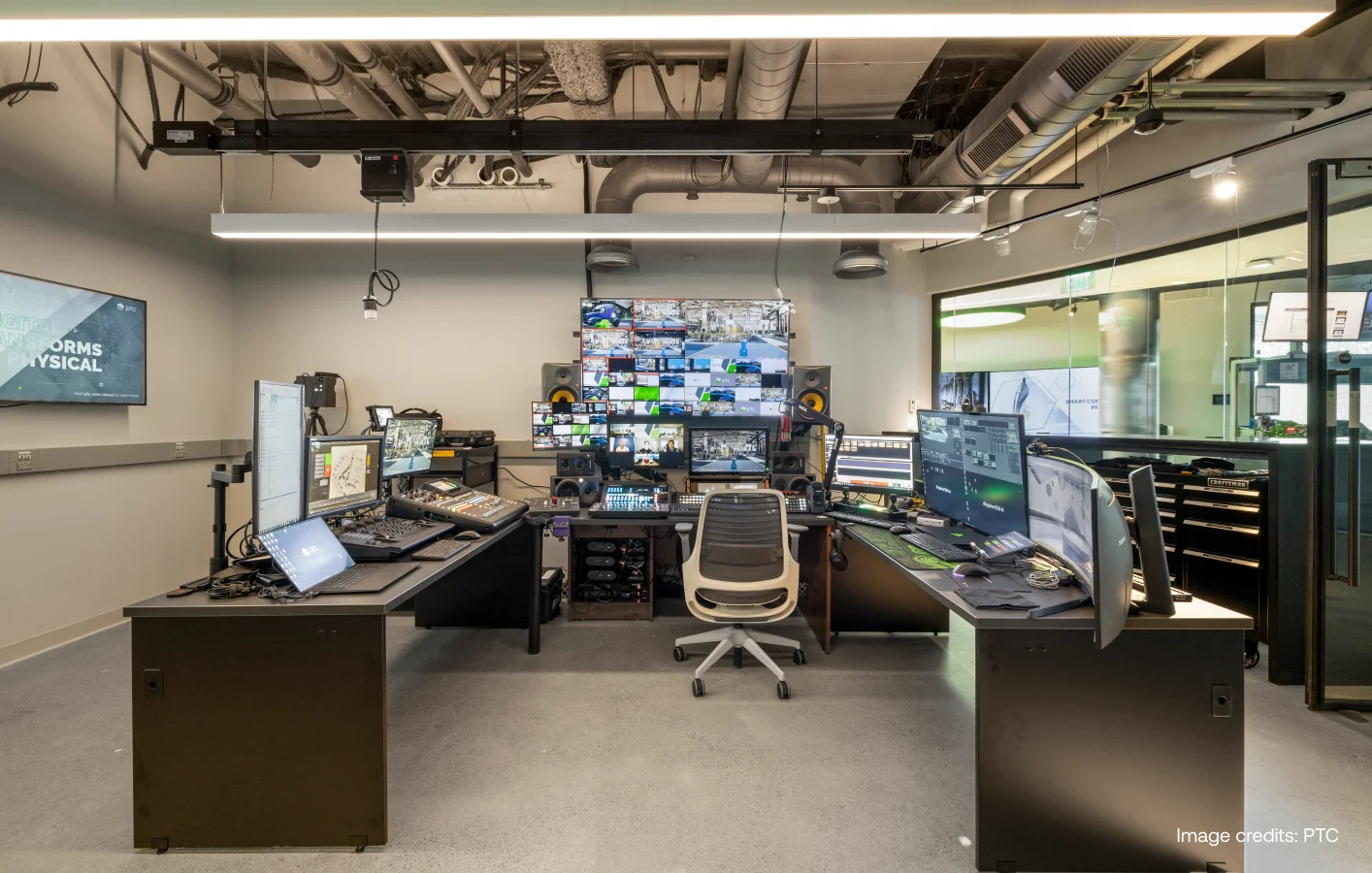
PTC’s installation predates this deal and illustrates the production capability Yamaha would be buying. Disguise’s servers and Designer software coordinate the visuals, while the camera system allows remote customers to participate in the presentation.

A Bigger Stage for Disguise
Yamaha wants to use its sales network to expand Disguise’s business in Japan and elsewhere in Asia. Disguise also arrives with established entertainment customers: its technology has been used on Taylor Swift tours and at Tottenham Hotspur Stadium, alongside productions including Top Gun: Maverick.
In the acquisition announcement, Fernando Küfer, Disguise CEO, said:
“Yamaha shares our ambition and is committed to investing in our people, platform, and partners.”
Carlyle, which invested in Disguise in 2021, says revenue more than tripled during its ownership as the company expanded into virtual production and broadcasting. The most recent figures in Yamaha’s filing are less buoyant, with revenue at Disguise’s parent group falling to £60.0 million in 2025, compared with £67.2 million in 2024.
Investment is reaching the venues themselves, too. Sony Pictures’ US $100 million backing of Cosm supports ticketed immersive screenings, while Muki Kulhan’s interview with The XR Beat explored how spatial audio can make remote audiences feel closer to a live performance.
Disguise says its brand and existing customer relationships will remain, with the same teams supporting customers and details of the combined roadmap due in 2027. Producers considering future joint products will need to know how they fit alongside equipment already installed, and whether closer integration saves enough time to justify replacing anything.