
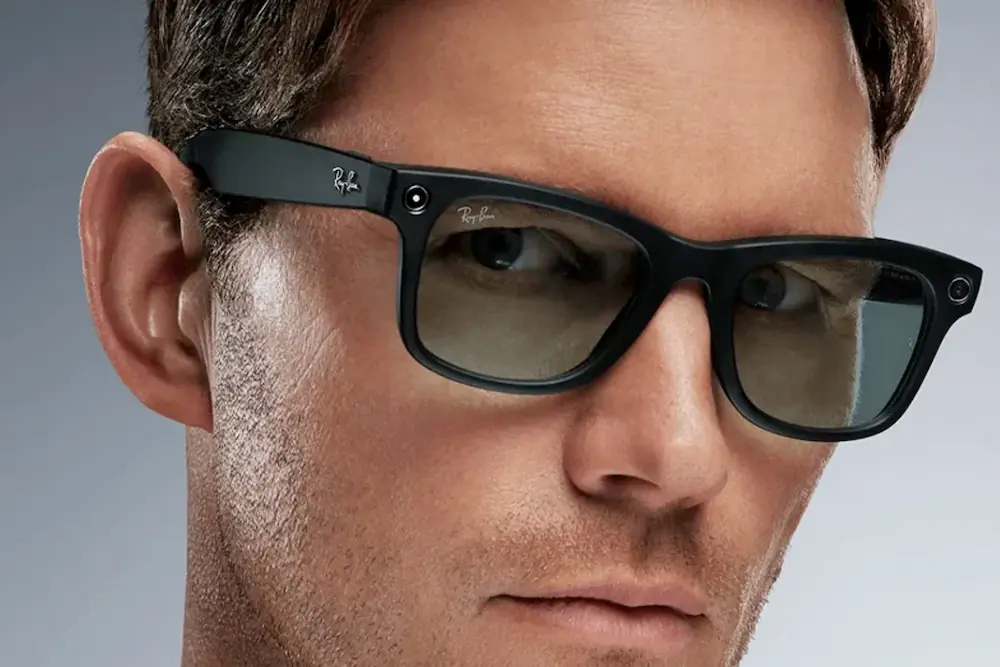
Ray-Ban Meta’s white capture light comes on when a wearer takes a photo or records video for their gallery. Some camera-based AI functions can operate without it on newer models, according to Ray-Ban’s guidance. The difference means an unlit LED can’t be treated as proof that the camera is inactive.
Updated November 6, 2026 with a clearer summary of the light’s functions and links to manufacturer guidance. The regulator interviews and legal-status reporting below reflect our September 2, 2026 update.
When the White Capture Light Is Used
Meta describes the front-facing capture LED as an indicator for photos and video intended for the wearer’s gallery. Its privacy explainer says it flashes briefly for a photo and signals throughout a video recording; it has no user-operated off switch.
| Function | What the Guidance Says |
|---|---|
| Taking a Photo | The external white capture LED flashes when the photo is taken. |
| Recording Video | The external white light signals while video is being recorded. |
| Livestreaming | Ray-Ban includes livestreams in its description of capture-LED use. Availability depends on the model and supported service. |
| Camera-Based AI | Ray-Ban says the light doesn’t turn on for some visual AI functions on newer models, such as identifying a plant or landmark. Its FAQ notes that first-generation glasses may still light up during some AI functions. |
The visual AI distinction appears in Ray-Ban’s published FAQ and in the German guidance captured during our original reporting. It doesn’t establish identical behavior across every model, country, firmware version or third-party app.
Meta told The XR Beat:
“A capture LED will blink bright white when you take a photo or video you can save or share.”

The Capture LED and Notification Light Are Different
The outward-facing capture LED is intended for people nearby. A separate inward-facing notification light gives the wearer status information, including power and battery alerts. Ray-Ban’s UK FAQ explains that the notification light’s brightness can be adjusted; that setting isn’t an off switch for the external capture light.
Visual AI still uses the camera even when an image isn’t being saved to the gallery. Image processing, audio capture and stored recordings therefore need separate consideration, as our smart-glasses privacy comparison explains.
What Happens if the Capture Light Is Covered?
Meta says its second-generation glasses and later safeguards prevent photo and video capture when an obstructed LED is detected. In August, the company also announced an update intended to stop recordings if the light was covered after capture began.
Our September reporting covered Meta’s response to deliberate tampering, including camera disabling. Those protections address interference with the light; they don’t change the separate guidance about normal visual AI use.

The following sections preserve the findings and responses gathered for our September 2 reporting. They should be read with that date in mind.
What Hamburg Tested in 2026
The Hamburg Commissioner for Data Protection and Freedom of Information began examining the glasses in summer 2025. Its activity report covers capture visibility, AI, microphones, data transmission and possible use of data for AI training.
The authority bought two pairs, checked the light and data flows, and opened one pair for component analysis. At the time of our September 2 update, the authority said a separate technical and legal report was due in the coming weeks.
Spokesperson Eva Zimmermann told The XR Beat that the office tested Ray-Ban Meta Wayfarer Gen 1 and “partially” tested Gen 2. The checks described to us used Android and Meta AI app version 22.9.0.0.29, including camera-based Meta AI. Eva said its conclusion covered photograph and video recording, adding that:
For camera based AI there is no LED signal at all.
Hamburg didn’t supply the glasses’ firmware version, lighting conditions, viewing angles, a feature-by-feature record or a definition of its partial Gen 2 work. It gave no separate results for video calls or livestreams, so its findings can’t describe each model or configuration.
Ray-Ban’s guidance and Hamburg’s checks align on the observed behavior. Hamburg said it’s in contact with the Bundesnetzagentur and Ireland’s Data Protection Commission. It said a later report would set out the method, fuller results and legal analysis.
What German Authorities Said at the Time
Section 8 of Germany’s Telecommunications Digital Services Data Protection Act, known as the TDDDG, covers networked devices disguised as everyday objects when they’re especially suited and intended to capture another person’s image or non-public speech without the person noticing. Intended use can count as unnoticed capture when the function isn’t clearly recognisable to the affected person.
The Bundesnetzagentur tells consumers that smart glasses need an optical or acoustic warning when photographing or filming. Its guidance doesn’t explain whether an image transmitted for an AI response falls into the same category when it isn’t saved to the gallery.
Meta said its glasses passed a Bundesnetzagentur review in 2022. The agency confirmed that earlier assessments covered various Ray-Ban and Oakley smart glasses developed with Meta. Wayfarer Gen 2 wasn’t included.
At the time of our September 2 update, the agency said it couldn’t assess Meta’s AI functions under section 8. It hadn’t opened a formal smart-glasses proceeding and didn’t identify the models, dates or results from its earlier work.
HateAid filed a criminal complaint in August alleging a TDDDG breach. Frankfurt’s Cybercrime Center, known as ZIT, was conducting a preliminary examination to decide whether sufficient initial suspicion exists. As of that September 2 report, no formal investigation had opened, and no authority or court had declared the glasses illegal or ordered a German sales ban.
Employers Will Need Function-Level Rules
Camera-based AI can support translation, object identification, scene descriptions and hands-free assistance. It can help disabled users and workers who need information without reaching for a phone.
Meta’s glasses range is expanding, increasing the chance that consumer devices will enter offices, factories, hospitals, shops and customer sites. Employers need to decide which models and functions suit each environment before approving them.
A policy based only on the white light won’t cover each camera use. Buyers should document where gallery capture, visual AI, video calls and livestreams are permitted; how workers and visitors are informed; which images and prompts leave the device; where data is processed; how long it’s retained; and whether supplier terms allow workplace data to improve products or models.
Controls on the companion phone may cover application installation and network access while leaving glasses firmware, personal Meta accounts and cloud AI settings outside the employer’s reach. Pilot teams should retest those boundaries after firmware and app updates.
Bathrooms, changing rooms and other sensitive spaces need separate rules because a camera-equipped device can create risk regardless of the active function.
A workplace test needs to cover each approved function on the actual glasses, phone, app and firmware being deployed. An unlit capture LED alone doesn’t establish that the camera or microphone is inactive.


