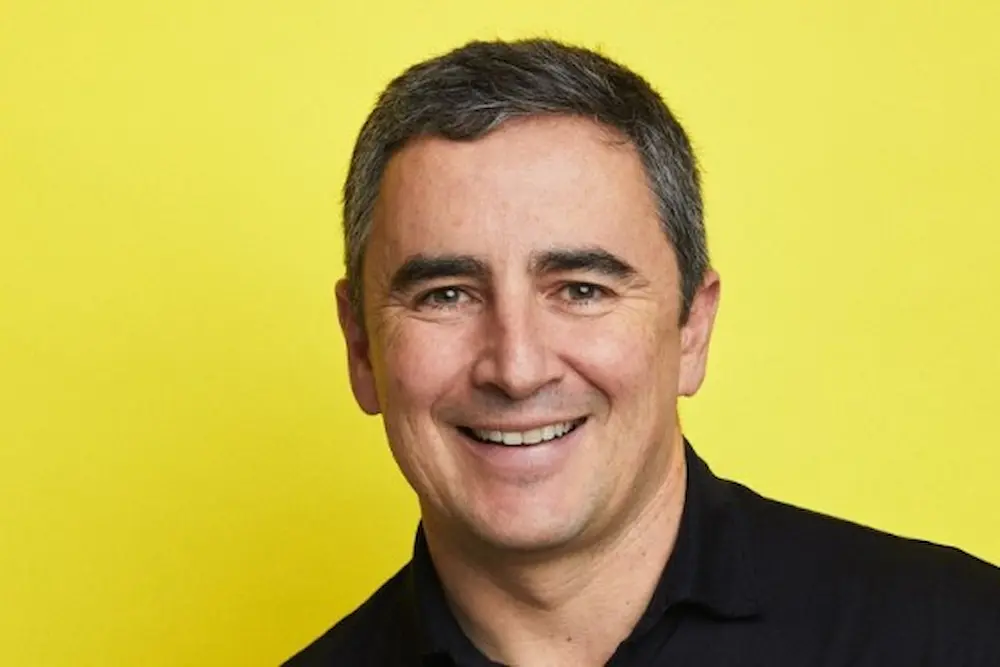
In seperate, same-day announcements, Snap announced the promotion of Harris to CCO, and its firm commitment to selling its SPECS glasses in the enterprise. Harris’ promotion brings experience in selling technology to businesses and helping them adopt it. SPECS could benefit from that experience, although his announced responsibilities cover advertising.
Snap wants its advertising business to help pay for SPECS to reach workers away from a desk. CEO Evan Spiegel’s 8 September letter says:
I’m so excited for SPECS to transform real-world jobs (the vast majority of all jobs happen away from a desk) so that people can keep their eyes up and hands free while benefitting from computing.
My favorite part of SPECS is that you can share your experience together with friends, family, and coworkers, all anchored in the real world. The liberation from screens is at hand.
The company has also appointed Ronan Harris as Chief Commercial Officer.
Harris will lead global advertising sales and the associated go-to-market organisation. Snap hasn’t announced a SPECS sales role for him. Spiegel remains CEO, while outgoing chief business officer Ajit Mohan has decided to leave the company.

Harris’ record offers some clues about the commercial experience Snap could draw on as it builds a business around the glasses, particularly in partner development, customer education and regional sales.
Advertising Must Support Hardware Investment
Announcing Harris’s promotion alongside the letter may suggest Snap is trying to reassure investors about its ability to keep funding SPECS. Spiegel opens by defending the business in the context of its share price, then acknowledges that investment in growth, Snapchat and the glasses has created “a lot of pressure on our profitability”. Snap has yet to record a full-year GAAP net profit. Spiegel’s letter.
Advertising growth is central to his proposed recovery. Revenue from ads rose 9% year on year in the latest quarter, and Spiegel argues that faster growth would improve earnings and help finance SPECS. Harris’s appointment to lead global advertising sales puts responsibility for generating that revenue with an executive who has delivered sustained European growth. Stronger sales could ease pressure on profitability and give Snap more room to support the glasses through development and early adoption.
Harris arrives with a record Snap wants to try to reproduce elsewhere. Under his EMEA leadership, European revenue grew at double-digit annual rates for ten consecutive quarters through Q2 2026, including nearly 40% growth in the first half of this year.
Enterprise software partners will have a financial interest in Snap sustaining that investment. Building for a new glasses platform requires engineering time before customer demand is established, followed by maintenance as the hardware and software change. A supplier with money to keep supporting the platform is easier to commit resources to.
Snap also preserved another financing option when it established SPECS Inc. in January. The wholly owned subsidiary can pursue partnerships and potential minority investment. The structure allows outside capital; it doesn’t confirm that an investor has committed funds.
Harris Has Sold Technology and Helped Businesses Adopt It
Harris spent more than 17 years at Google, most recently running its UK and Ireland business. His published biography describes work growing advertising sales across EMEA and introducing regional products and initiatives. Earlier, he studied electronic engineering and worked in Mitsubishi Chemical’s information storage products division in Japan.
At Google, Harris announced a nationwide digital skills programme in 2022, combining in-person training and mentoring with career certificate support for small businesses. Google was spending on customers’ ability to use technology alongside the products themselves.
SPECS will need a comparable commitment to teaching partners how to build and deliver applications. An industrial software company may already understand maintenance records and factory systems while having little experience with Lens Studio. Training, technical assistance and reusable examples could reduce the cost of its first customer project. Harris’ experience could inform that work, although Snap hasn’t assigned it to him publicly.
He has also been involved in representing Snap’s AR investment at the highest level in the UK. In a 2025 post, Rachel Reeves described meeting Harris and colleagues about Snap’s $500 million UK investment, including technology development in Abingdon for future AR glasses. He was already representing the company’s long-term spending on glasses before this promotion.
SPECS is Recruiting for Industry Sales and Delivery
The XR Beat reported six SPECS enterprise vacancies in July: four industry leads covering healthcare, higher education, manufacturing and retail, supported by two partner roles.
The manufacturing job description names remote assistance, digital instructions, quality checks, maintenance and training. The role owns customer pipeline and sales cycles, and is expected to turn early projects into offerings that partners can sell repeatedly. Snap specifically prefers experience at Microsoft HoloLens, Magic Leap or a comparable AR company.
Recruiting people who have already sold industrial AR could help SPECS avoid rebuilding customer relationships and deployment knowledge from scratch. A manufacturing lead needs to understand who controls a maintenance budget, how IT approves an application and what evidence an operations director needs before expanding a pilot.
The technical partner vacancy covers onboarding, Lens Studio training, certification and support for systems integrators and other services businesses. Snap acknowledges in the listing that many incoming partners will be new to Lens Studio. Its proposed sales operation therefore includes people responsible for making those partners capable of delivering the work.
Could Harris’ advertising relationships could help open discussions with companies that also buy workplace technology? Perhaps, although a retailer’s marketing team and store operations team usually commission different work. Selling an AR campaign doesn’t establish that the retailer wants glasses for stock checks or staff training – SPECS’ sector specialists would still need to win those budgets.
Employers Need Cohesive Pricing, Software
Snap has already introduced tools for bringing existing software to SPECS, including a Unity migration agent and support for C and C++ code through its Native Development Kit. Reusing code could reduce some development work, although connecting an application to a customer’s systems and supporting its users still takes time.
The June hardware announcement set a $2,195 price and expected autumn shipments in the US, UK and France. Neither that price nor the enterprise vacancies establish the commercial terms for a managed workplace deployment. The XR Beat’s earlier coverage of SPECS’ work applications examined the need for software people would keep using after launch.
A manufacturer considering remote assistance will need to know who supplies the application, connects it to approved systems and restores service when it fails. Expansion will depend on everyday evidence: faster repairs, less rework or fewer specialist journeys, measured against the full cost of hardware, integration and support.