Meta will begin rolling out the first stable release of its AI glasses toolkit on 30 September, as developers get new tools for Ray-Ban Display and the forthcoming VR Glasses.
The second day of Connect on 24 September followed the hardware announcements covering lighter VR, camera-free eyewear and UK sales of Ray-Ban Display. Public distribution of glasses apps remains restricted, with Meta still to open submissions for its planned app discovery services.
Mobile Apps Reach Further Into Glasses
The Wearables Device Access Toolkit 1.0 moves out of developer preview after a year of testing.
It lets developers extend an existing mobile application to glasses while retaining the application’s underlying software and services. One integration can support models with and without a display, although the available features depend on the device.

Meta’s Connect update adds ways to launch an app through “Hey Meta”, recognise spoken commands and use motion information from the glasses. Display interactions also include swipes from the Neural Band wrist controller.
Meta demonstrated the combination through BirdSpotter, a sample application using camera, speech, motion and display functions. It provides a working reference for developers combining several glasses capabilities in one app.
Developers building directly for Ray-Ban Display can already use standard web technologies. Web apps can use location and wrist movement, and Meta has added a UI toolkit and browser simulator for testing layouts before moving to the glasses.
App Discovery Starts With Curated Selection

Meta plans to feature glasses experiences in the Meta AI mobile app and offer selected web apps through Explore on Ray-Ban Display. Developers will need approval to appear in those services.
“We’re currently starting with a curated showcase to highlight the best of what’s possible on AI glasses,” Meta says on its developer discovery page.
Meta has yet to say when developers can submit their apps for inclusion. They can build and test now, and share web apps by URL with people who enable Developer Mode.
Connecting Services to Meta AI
Meta AI Connectors provide another route for software companies: making their services available through the assistant. Developers expose actions from their service’s API, allowing Meta AI to call those actions on glasses, in its app or on the web.
Account linking uses OAuth, so users can connect an existing service account. A separate WebMCP preview lets developers specify actions Meta AI can perform within a glasses web app.
Access to Connectors is limited to selected developers, admitted in waves. Meta explicitly says that “connectors built during the preview aren’t yet available to the public”. Public publishing and discovery are planned for a later phase, with further details promised in the coming months.
VR Apps Target Hand and Eye Inputs
For the VR Glasses due in spring 2027, Meta’s v207 development tools are available now. The device shares Quest’s operating system, store and payment system, allowing existing developers to prepare applications before the hardware ships.

Eyes and hands are its primary inputs. Touch Plus controllers are supported and sold separately. Meta says the store will prioritise apps that work without controllers for VR Glasses owners who do not have them; customers with controllers will receive recommendations from the full catalogue.
Interface layouts also need attention. Meta puts the glasses’ field of view at roughly 70 by 66 degrees, compared with Quest 3’s 110 by 96 degrees. Controls placed near the edges of a Quest interface could be harder to see on the new device.
Updated Unity and Unreal tools support gaze interaction and a VR Glasses simulator profile. Android developers have tools for multiple windows, while a gaze SDK remains in preview. Desktop simulators let teams begin checking input and layout before they can test on the finished hardware.
AI Testing Tools and $1m in Prizes
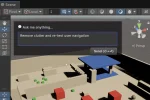
Meta also highlighted XR Operator for Unity, which lets AI agents inspect and interact with a running VR application. Agents can simulate headset and hand input, inspect scenes and capture screenshots to help reproduce faults and check changes. The tool remains experimental, with Meta warning that its interfaces and behaviour may change.

The company has opened a $1m Start Developer Competition covering entertainment, gaming and productivity. The productivity category includes workspaces, task management and creative tools.
Entries must work fully with hands throughout the experience. The competition is open to Start programme members, subject to its rules, with submissions closing on 18 November and winners expected around 11 December.