US shipments started last week whilst UK shipments begin on 21 September. Developer tools and a Lumyeye integration extend the glasses’ potential beyond HTC’s own AI features – forward-thinking businesses should take note.
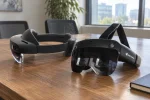
HTC has opened orders for its VIVE Eagle AI glasses across Europe, North America and Australia, with UK prices starting at £429. The company announced the expansion on 3 September and says UK and European shipments will begin on 21 September. HTC’s launch announcement lists immediate shipping in North America.
For organisations exploring hands-free applications, the accompanying software deserves attention alongside the hardware. HTC publishes tools for connecting third-party apps to its glasses, while accessibility software provider Lumyeye describes an integration that lets people operate its assistant without holding their phone.
Camera Controls Include a Bystander Stop Command
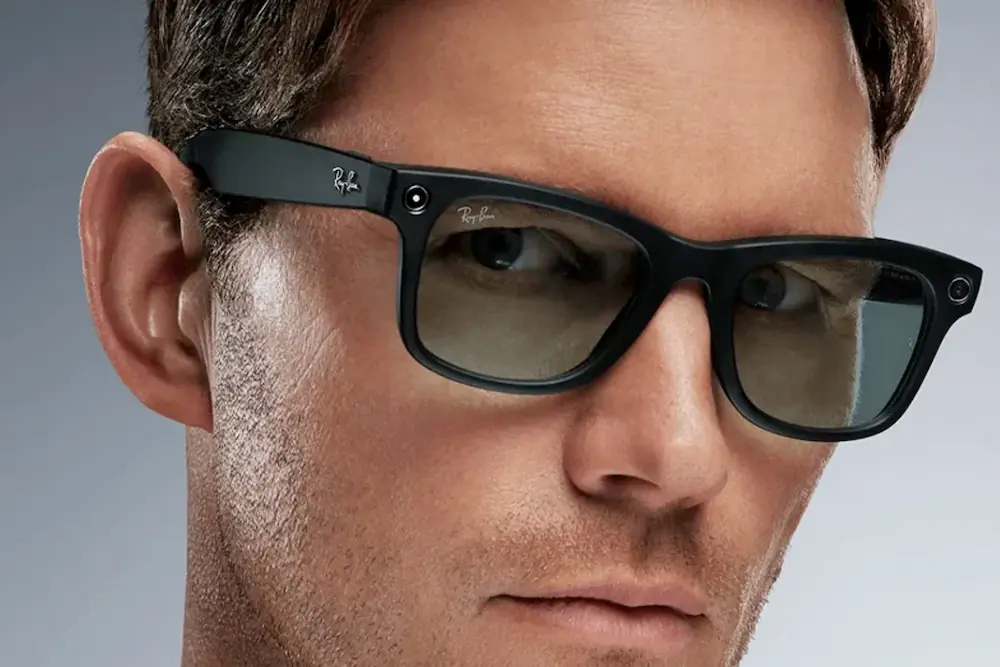
HTC’s product documentation describes a flashing recording indicator and says the camera is disabled when the glasses are removed or the indicator is covered.
A further setting allows someone nearby to say “Stop filming” to end a recording. HTC describes this as an option that can be enabled, so buyers should check its configuration rather than assume it is active by default. The launch release also says the indicator adjusts its brightness to surrounding conditions.
For a workplace assessment, these features create specific questions to test: can colleagues recognise the indicator, does the spoken stop command work in a noisy room, and who controls the setting? This remains a manufacturer description; The XR Beat has not tested those behaviours.
HTC will hope to allay some of the fears surrounding smart glasses misuse that have recently plagued competitor brands such as Meta.
AI Features Still Need a Data Review
VIVE Eagle supports functions including translation, visual queries and AI-generated notes. HTC says requests to supported AI services are de-identified and that user data is not used for training. Availability depends on factors including region, device, language and subscription. HTC’s product page sets out those qualifications.
For an employer, a promise about model training answers only part of the data question. An assessment would still need to establish what information leaves the device, which services process it, and how recordings and transcripts are retained or deleted. The same review would need to cover any separately connected application.

Third-Party Apps Can Access Capture and Audio
HTC’s VIVE AI Glasses SDK documentation lists interfaces for image capture, audio and video streaming, transcription, spoken responses and button events. Documentation is available for Android and iOS.
These interfaces give developers a route to build applications around the glasses’ inputs and outputs. For example, an application could combine a captured image with an audible response. Delivering a dependable workplace service would still require the application, its data handling and its support process to be tested together.
Lumyeye offers a concrete example. Its VIVE Eagle integration uses the glasses’ button, camera, microphones and speakers to access Lumyeye Pro on a paired phone. The company describes reading text, identifying objects and describing the scene ahead, with responses delivered through the open-ear speakers.
Lumyeye says the phone can remain asleep in a pocket once connected and ready. AI requests require an internet connection, and its Pro subscription is purchased separately. The company also cautions that the system can make mistakes and complements existing mobility aids.
Workplace Readiness Needs Separate Evidence
The public material reviewed establishes hardware availability, documented app interfaces and a named software integration. It does not establish measured workplace productivity gains or the fleet controls an employer would need for a shared deployment – but given the glasses’ AI-equipped capabilities, it’s not hard to imagine benefits in both back and front office functions.
For example, Even Realities, whose G2 model doesn’t have a camera, are focusing on enhancing sales workflows. Despite the potential however, the company hasn’t yet started shipping to enterprise clients:
Before expanding a trial, an organisation would need answers on account ownership, device reassignment, support and control of captured material. The XR Beat’s smart-glasses pilot guide sets out the questions to resolve around the task, success measures and operational demands.