Thirteen trainee eye surgeons in Korle Bu teaching hospital logged more than 230 hours on one simulator. Their hospital scheduled practice during working hours, assigned someone to run the programme and required consistent scores before trainees could progress.
Photos: Geoff Oliver Bugbee
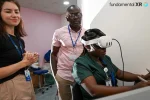
Between January and April 2026, 13 first-year residents at Korle Bu Teaching Hospital logged more than 230 hours on a single simulator. The hospital uses a surgical training system developed by eye care charity Orbis International and Fundamental XR.
The hospital combined the equipment with a timetable, supervision and requirements for progression. Training managers considering a similar XR programme need to plan for those commitments, alongside the hardware and software considerations.

Put Practice in the Timetable
In written answers to The XR Beat, Natalia Ronatowicz, Fundamental XR’s Client Success Manager for eyecre charity Orbis, described three arrangements behind the programme:
- Protected time: simulation was included in formal duty hours.
- Clear responsibility: a named coordinator ran the programme and followed up with residents.
- Faculty review: teaching staff assigned and supervised training, using the simulator’s reports to monitor participation and progress.
A hospital adopting this approach needs to allocate teaching time as well as a place for the equipment. Residents need access during their working day, and staff need time to review the results.
The Programme in Numbers:
- 13 first-year residents
- 1 simulator
- 230+ hours of recorded practice
January to April 2026. Figures supplied to The XR Beat by Fundamental XR
Require Consistent Performance
Residents had to demonstrate repeat performance before progressing to the wet lab, where practical training uses tissue and surgical supplies.
Ronatowicz told The XR Beat that residents have to:
“reach and hold a gate score across consecutive sessions before progressing to the wet lab”
The system teaches manual small-incision cataract surgery, or MSICS. Across the group, residents averaged more than 40 complete simulated procedures during the four-month period.
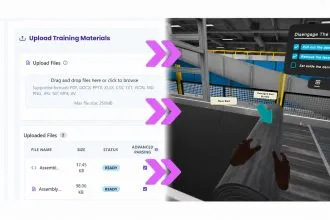
Orbis and Fundamental launched the system in 2024. It combines VR with haptic feedback, providing a sense of touch during practice, and records performance data for assessment.
Fundamental XR described the purpose of repeated practice in its published account of the programme:
“What makes the simulator so valuable is that you can make mistakes, learn from them, and improve without putting patients at risk.”
The same account described first-year resident Dr Patrick Sapana-Kosa, who completed more than 80 simulated MSICS procedures and over 25 hours of virtual practice before operating on a patient.
Use Teaching Time Differently
Faculty at Korle Bu reported that residents arrived at the wet lab familiar with the surgical sequence. They spent less time teaching basic technique and observed fewer mistakes and lower consumption of practice materials.
Ronatowicz’s written answers relayed those faculty observations. In an interview published by Orbis, she explained how practising the basics in VR could change the instructor’s role:
“So the trainers can focus on the more advanced things and not hold their hand for the entire wet lab.”
Orbis also described her work developing local trainers at Korle Bu and another Ghanaian hospital during its 2025 project. Those staff were intended to continue leading simulation training after the visiting team left.
Measure Real-World Performance Beyond the Simulator
Simulator scores and practice hours establish what residents completed in VR. The improvements in wet-lab teaching, mistakes and consumable use remain faculty observations.
In its September answers, Fundamental XR confirmed that it did not hold objective wet-lab assessment data, measured error rates, procedure times or patient outcomes for the programme. Collecting wet-lab assessments alongside simulator records is a goal for the next phase.
Lower use of materials and changes in instructor workload could affect the cost of training – as The XR Beat’s coverage of VR training costs and instructor availability has explored, both belong in the buying decision.